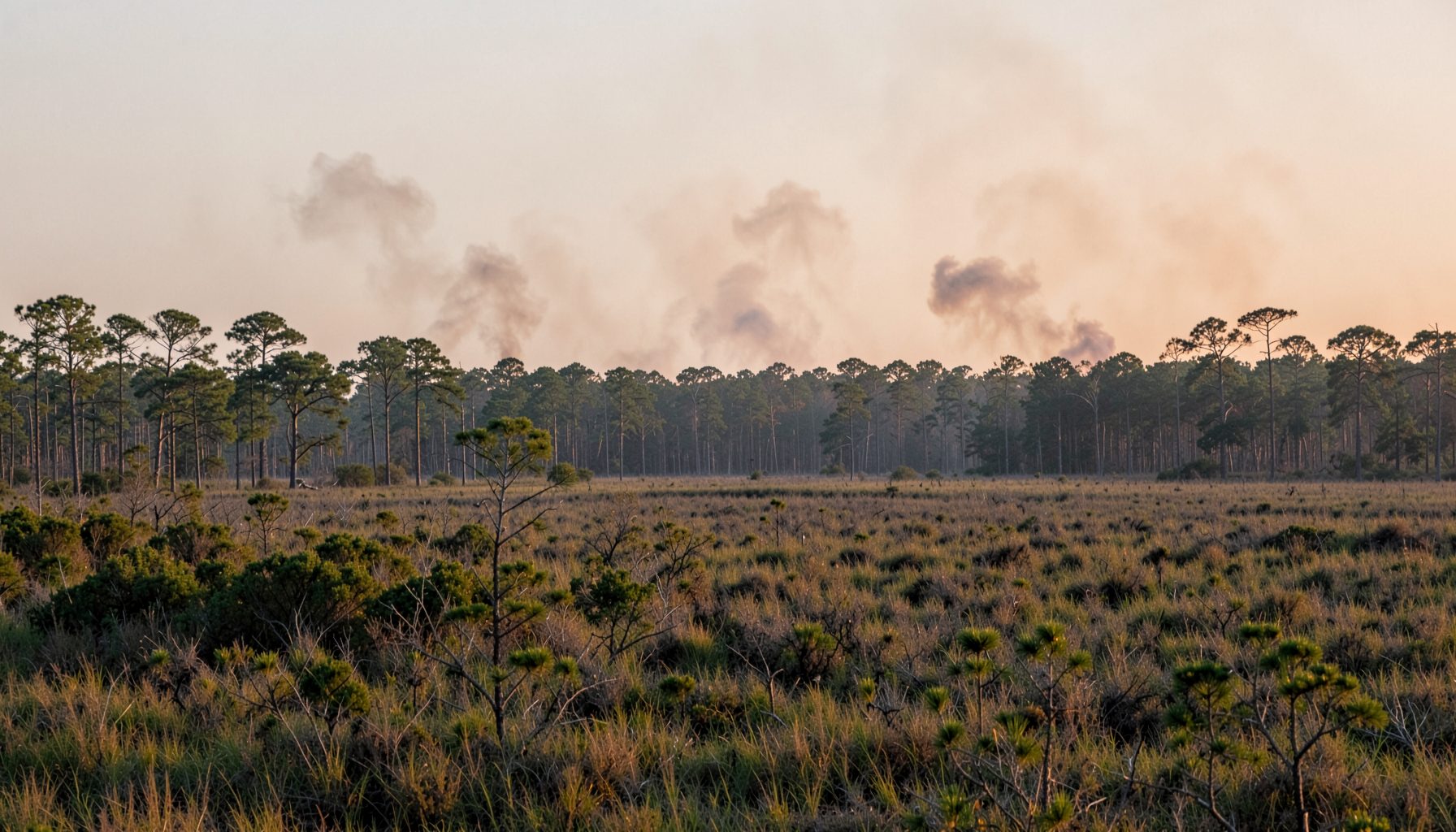
Wide landscape of pine flatwoods under a hazy afternoon sky, with scattered smoke columns rising above the treeline in muted greens and grays

Predictive Services

Intelligence, fuels and fire danger assessments, outlooks, and weather information to support wildland fire decision-making in Florida.

Predictive Services at the Florida Interagency Coordination Center brings together intelligence from multiple agencies to support informed wildland fire decision-making across the state. By consolidating data on fuels, weather, and fire danger, the program provides a shared picture that helps federal, state, and local partners anticipate conditions before they escalate. This collaborative approach ensures that resources are positioned thoughtfully and that incident managers have the context they need to act with confidence, whether they are planning a prescribed burn on a national wildlife refuge or preparing for a busy dry-season period.

Fire danger assessments are at the heart of the predictive services mission. Analysts monitor seasonal trends, fuel moisture levels, and short- and long-range weather patterns to develop outlooks that guide daily operations and strategic planning alike. These assessments are particularly valuable during Florida's dry season, when elevated conditions can increase the likelihood of wildfire ignitions across forested lands, parklands, and rural districts. By translating complex environmental data into practical guidance, the program helps crews and cooperating agencies prioritize their efforts and stay ahead of changing conditions.

Weather information plays a critical role in the predictive services program, as fire behavior is shaped by temperature, humidity, wind, and precipitation patterns. The center tracks both current conditions and forecast trends, providing partners with a reliable reference for evaluating burn windows, smoke dispersion, and potential fire growth. This information supports everything from daily dispatch decisions to multi-week planning efforts, allowing agencies such as the Florida Forest Service, the U.S. Fish and Wildlife Service, and the National Park Service to coordinate their activities effectively across the landscape.

The program also emphasizes the value of prescribed fire as a land management tool, and predictive services help identify windows when environmental conditions align for safe, effective burns. By assessing fuel conditions and weather outlooks, analysts can flag opportunities for planned ignitions that reduce hazardous fuel loads and support healthy ecosystems on refuges, parks, and other public lands. This forward-looking approach strengthens the broader interagency mission of protecting communities and natural resources while promoting resilience and stewardship across Florida's diverse wildland areas.

Intelligence Products

Predictive Services produces intelligence products that provide situational awareness for wildland fire managers across Florida. These products synthesize current conditions, resource status, and emerging trends to support operational planning and interagency coordination.

Products include periodic situation briefings, weekly fire summaries, and incident-specific outlooks tailored to the needs of federal and state cooperators.

Fuels & Fire Danger

Monitoring fuel conditions and fire danger is central to preparedness. Predictive Services tracks drought indices, fuel moisture levels, and energy release component values across Florida's diverse ecosystems — from the Everglades swamp systems to the pine flatwoods of the Panhandle.

Regular assessments help dispatchers and incident commanders anticipate fire behavior and allocate resources accordingly.

Fire Weather Outlooks

Weather is a primary driver of wildland fire activity. Predictive Services provides fire weather outlooks and forecasts that highlight critical patterns — including dry cold fronts, sea breeze interactions, and lightning events — that influence ignition potential and fire spread across the state.

These outlooks support both suppression readiness and prescribed fire planning.

WIMS Indices

The Weather Information Management System (WIMS) provides access to National Fire Danger Rating System indices for Florida. Available data includes:

  • 7-Day Forecast — projected fire danger indices for the coming week
  • 28-Day History — observed indices over the past four weeks for trend analysis

These indices help fire managers evaluate burning conditions, plan prescribed fire operations, and anticipate suppression needs.

Related Resources

Predictive Services works closely with Dispatch Operations for resource tracking and staffing coordination, and with Aircraft resources for aviation-based reconnaissance and air operations planning. External partners include the Southern Area Coordination Center (SACC) and the National Interagency Coordination Center (NICC).